


Міжнародний проєкт DRANICA.24 «Промоція дерев'яних виробів як елементів нематеріальної культурної спадщини Карпатського Єврорегіону. Технічний посібник з традиційної обробки деревини» покликаний зберегти традиційні ремесла, що століттями формували культурну самобутність прикордонних територій Карпат. І хоча його назва відсилає до драниці – давнього покрівельного матеріалу, – увага проєкту сягає значно ширше, до всіх ремесел, якими жив цей край. Одне з них – лозоплетіння.
Лозоплетіння належить до найдавніших видів народного декоративно-ужиткового мистецтва, що сформувався на основі використання природних рослинних матеріалів. На території Закарпаття це ремесло набуло особливого розвитку завдяки сприятливим природно-кліматичним умовам, значним запасам вербової лози та багатовіковим культурним взаємозв'язкам із сусідніми країнами Європи. Одним із найвідоміших осередків традиційного лозоплетіння є Хустщина, де протягом XIX–XX століть сформувалися локальні технологічні прийоми, характерні конструктивні особливості виробів і власна система передачі ремісничих знань. Формування лозоплетіння на Хустщині було тісно пов'язане з природними особливостями краю. Значні площі заплав річок створювали сприятливі умови для росту різних видів верби, які стали основною сировиною для виготовлення плетених виробів. Доступність матеріалу сприяла широкому поширенню ремесла серед сільського населення.
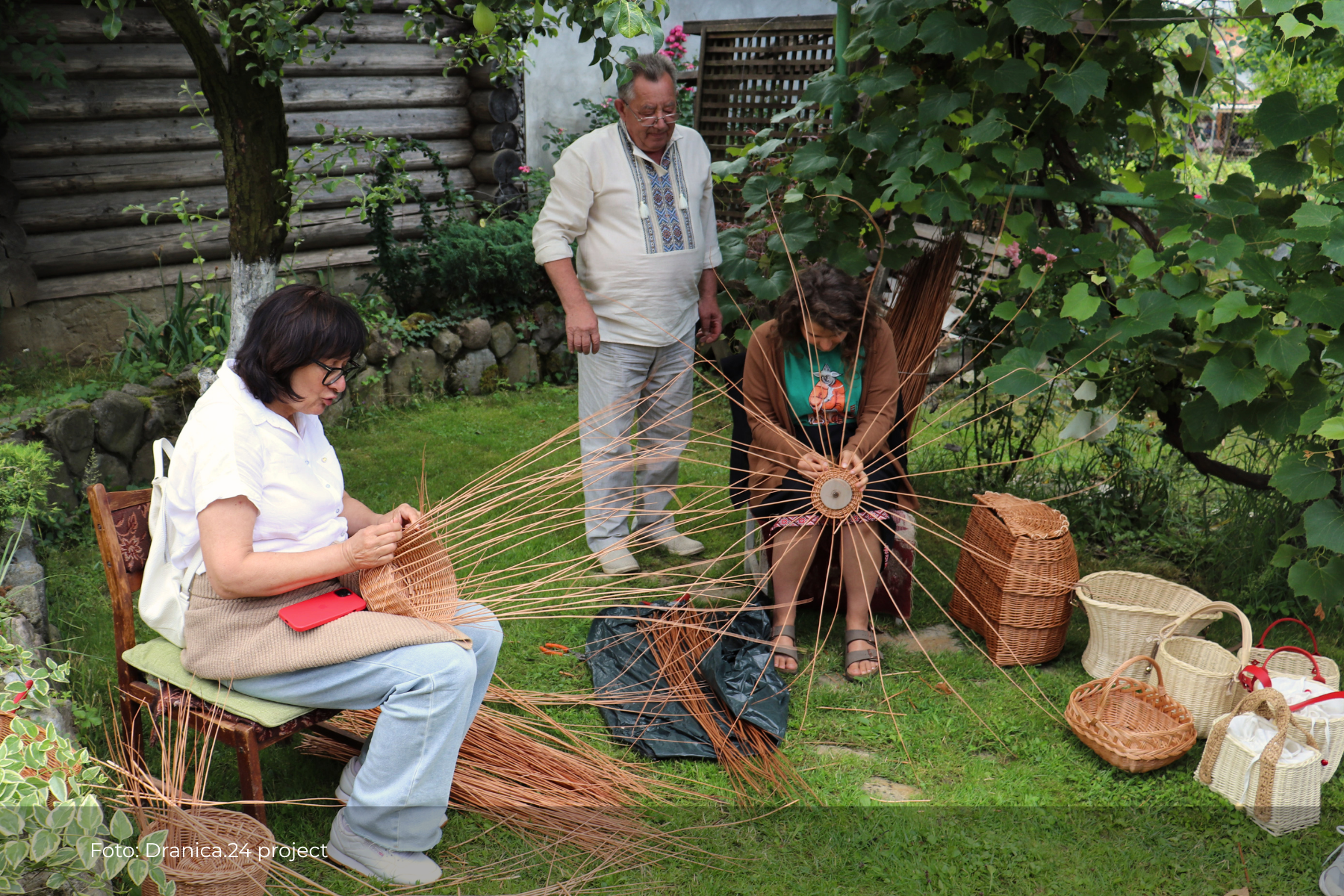
Саме тому вивчати це ремесло вирішили в рамках міжнародного воркшопу у відомому селі на Закарпатті – Ізі. Славиться воно саме лозоплетінням, яким володіє чи не кожен тамтешній житель. Свого часу це був основний спосіб заробітку селян; згодом люди почали обирати й інші професії, але ремесло нікуди не поділося. Як запевняли герої нашого сюжету: «Ким би не була людина – лікарем, вчителем, – вона приходить з роботи і сідає плести».
Учасники міжнародного воркшопу, серед яких – дослідники, викладачі та студенти, журналісти, працівники музеїв та інші зацікавлені особи завітали до подружжя Леньо – Марини та Володимира, які вже близько сорока років займаються лозоплетінням. Вони провели для учасників відкритий воркшоп: показали весь процес виробництва й розповіли, як усе відбувається і чому це ремесло важливе саме сьогодні.
Виготовлення виробу з лози має два етапи. Перший – заготівля матеріалу. Лозу ріжуть з осені до весни, доки не розпустилося листя. Вибирають найрівніші прутики й сортують їх за товщиною та довжиною. Обробка лози – традиційний промисел, що вимагає чіткого дотримання технології. Свіжозрізані снопи спершу проварюють у великих котлах протягом двох з половиною – трьох годин і накривають чимось на кшталт плівки, щоб створити ефект паріння. Після цього сировину витягують і на годину-дві «загартовують»: завдяки цьому шкірка легко відділяється, і прут простіше очистити (роблять це на спеціальних станках).
Залежно від параметрів лози, майстри сортують її для різних робіт. Товста і велика лоза ідеально підходить для меблів – крісел-качалок чи гнутих каркасних елементів; тонка й дрібна йде на легкі побутові вироби – кошики та плетені сумки. Традиційно найбільш поширеними виробами місцевих майстрів були господарські кошики різної місткості, кошелі для картоплі, кошики для грибів, фруктів і винограду, дитячі колиски, меблі, декоративні тарелі, клітки для домашньої птиці та рибальські пастки. Особливе місце займали великі виноградні коші, що широко використовувалися у виноробних господарствах Закарпаття. Їхня конструкція вирізнялася посиленим каркасом, щільним плетінням і зручними ручками, які забезпечували довговічність виробів навіть за інтенсивної експлуатації.
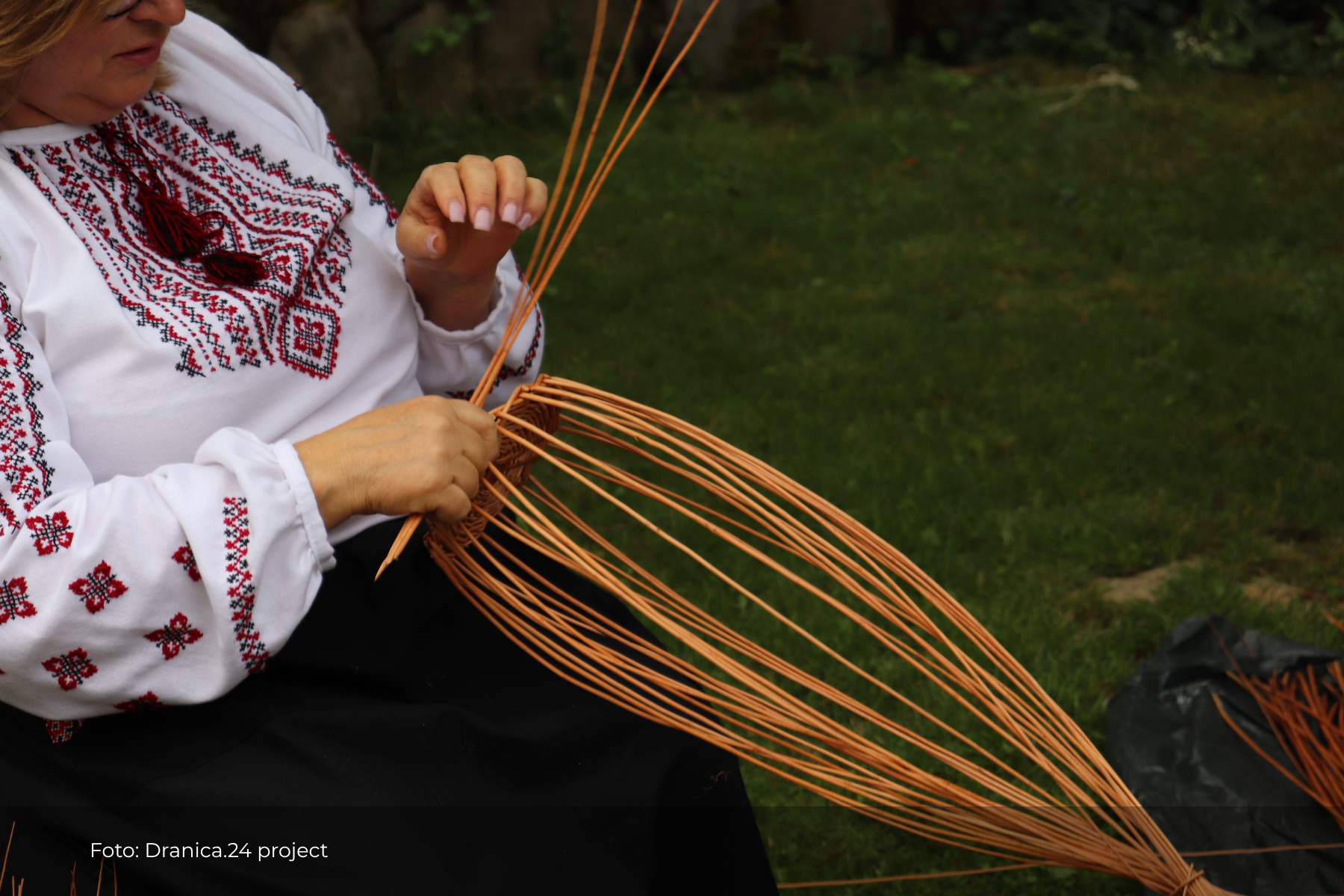
Подружжя, що проводило воркшоп має і власну плантацію сировини, проте частіше воліє її закуповувати. «Ми знаємо, скільки й на що матеріалу піде», – пояснюють вони, тож немає сенсу заздалегідь витрачати час на підготовку. До того ж власна лоза дещо товстіша за ту, яку вони зазвичай використовують. Тому її часто продають сусідові, який спеціалізується саме на великих виробах таких як меблі. Утім, пані Марина запевняє: у разі скрути, якщо не вдасться замовити сировину, і ця на кошики згодиться.
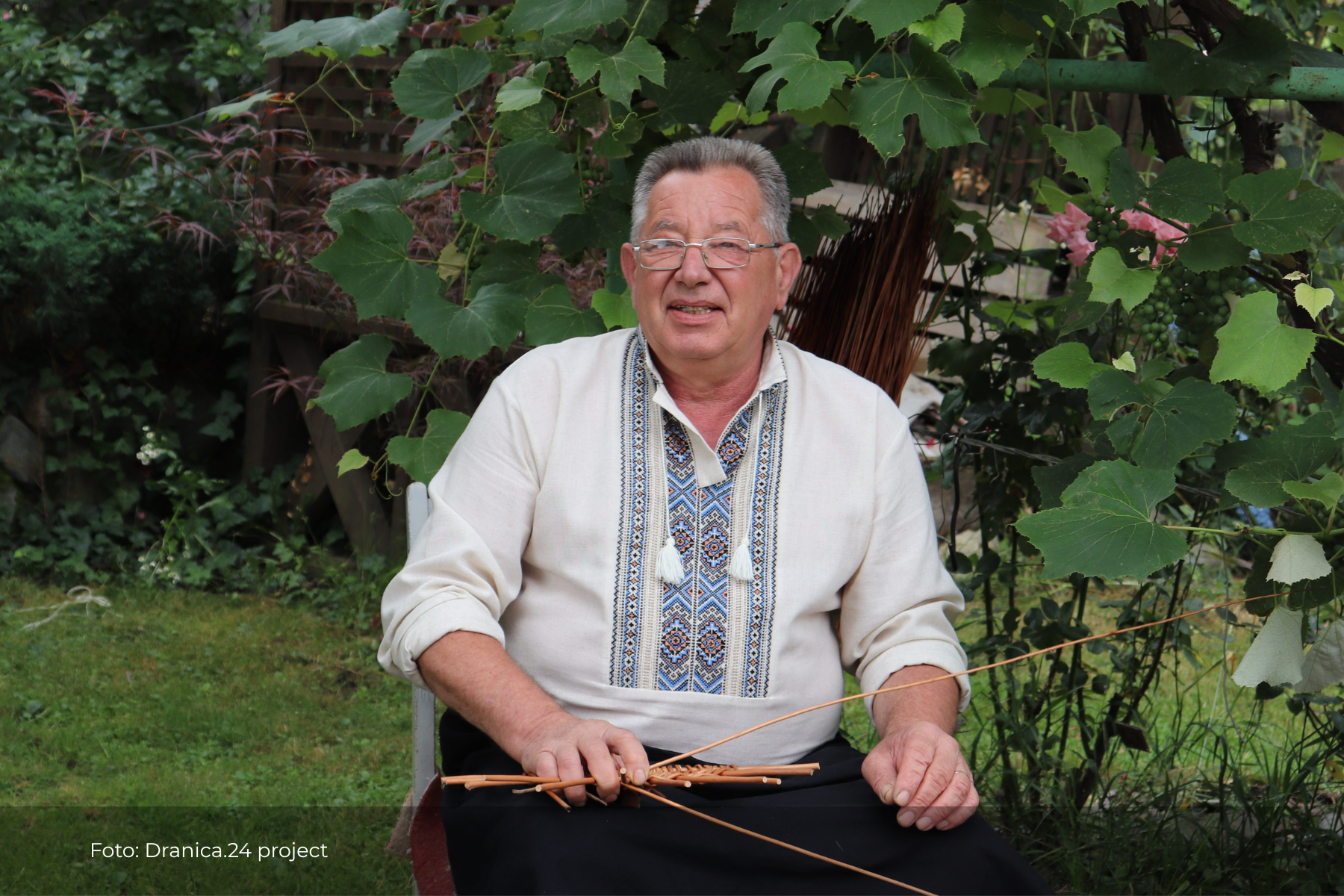
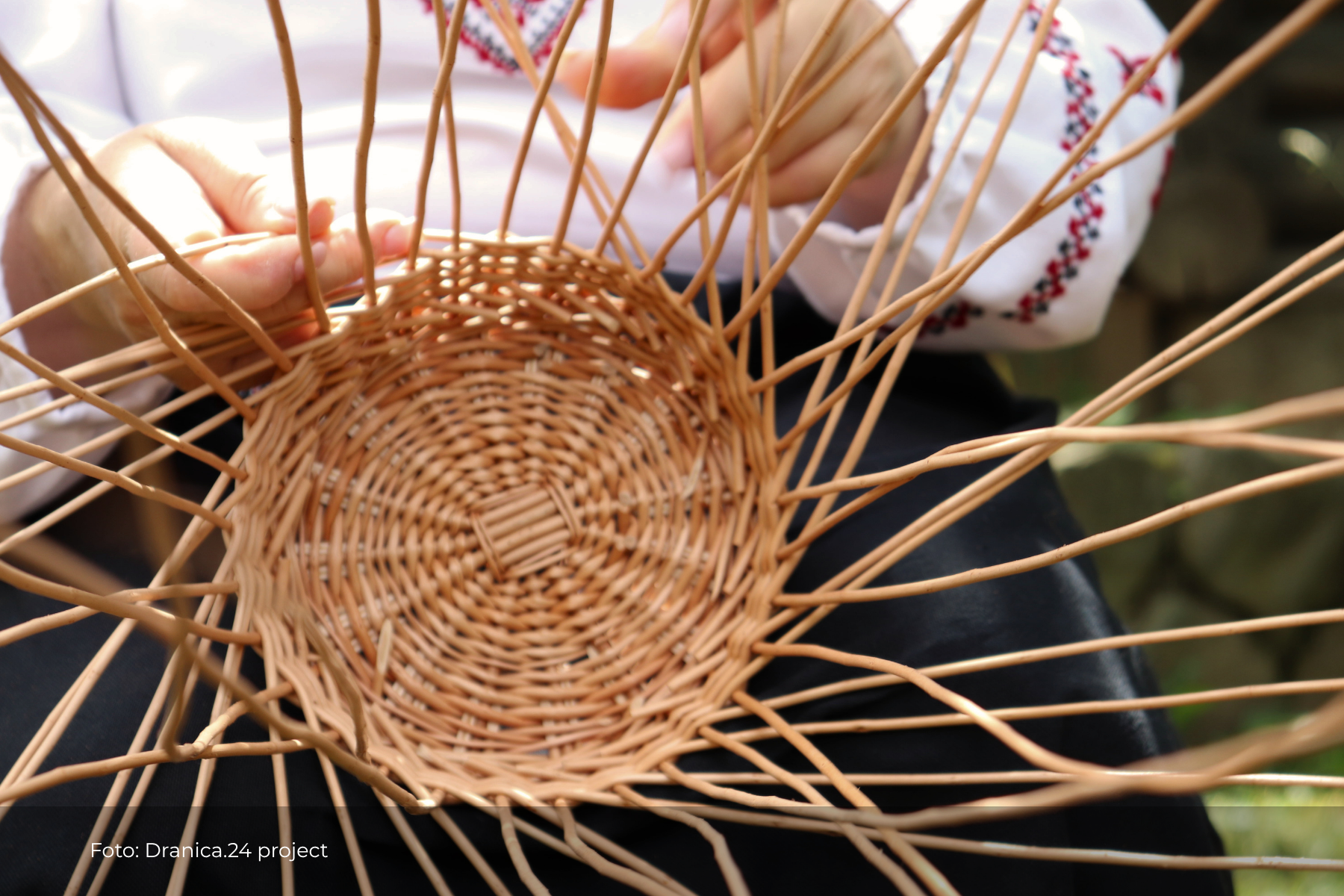
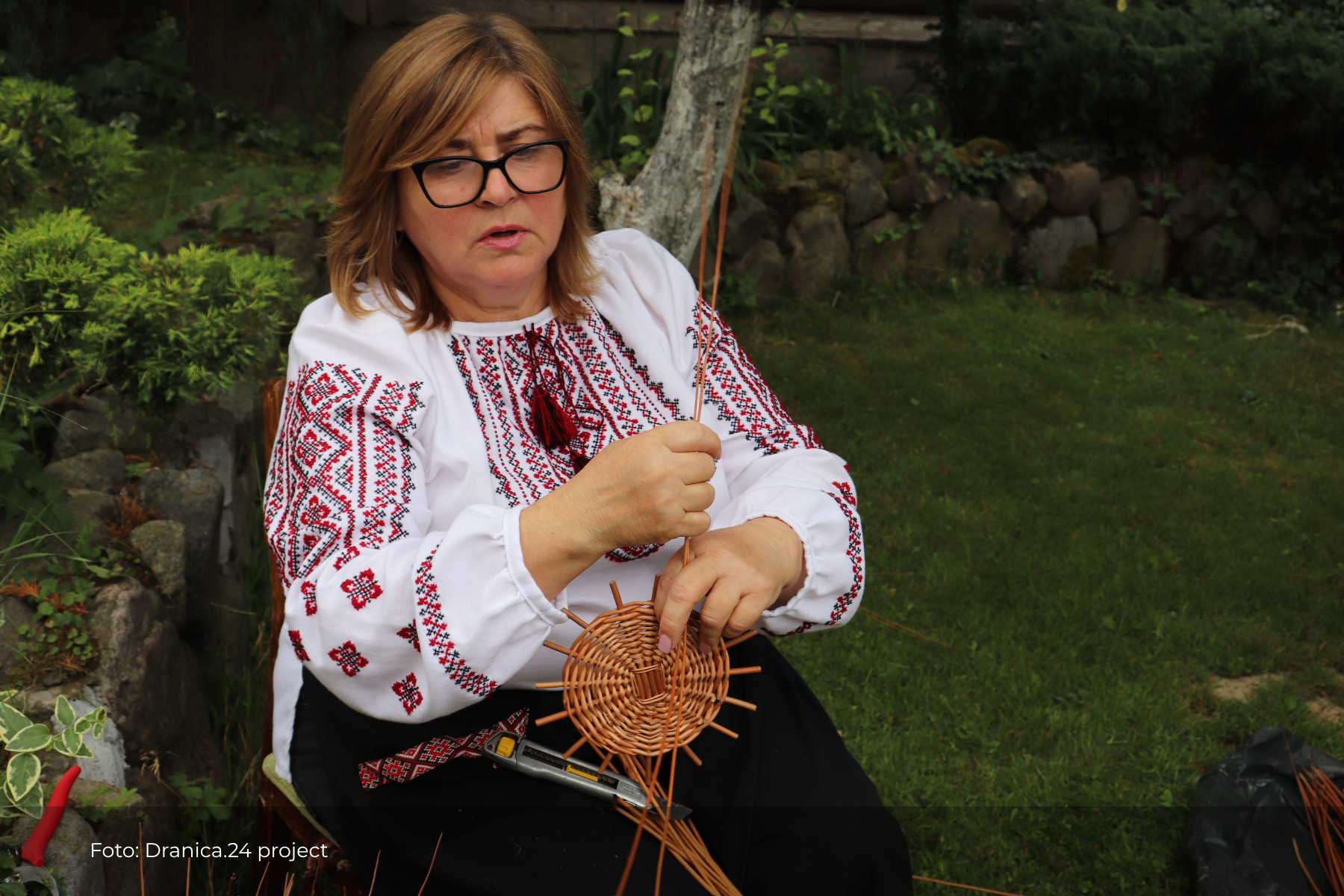
Отож, коли матеріал готовий, настає час братися до роботи. Попередньо потрібно замочити лозу, щоб та було м’якою та піддатливою. Для Марини й Володимира це ремесло – спосіб заробітку, тож вони заготовляють одразу кілька основ для майбутніх виробів – це оптимізує час. Плетіння починається з дна. «Без хорошого фундаменту не буде доброго будинку», – підмітив Володимир Леньо. До речі, у сім’ї здебільшого саме він і робить цей «фундамент». Виглядає це так. Класичне плетіння круглого дна починається зі створення хрестовини: спершу розщеплюють чотири-шість товстих прутів посередині, а в утворений отвір вставляють стільки ж цілих. Далі їх переплітають по колу парами – технікою «мотузочка» у два прути, – щоб надійно зафіксувати основу. Після цього всі промені-стояки розводять віялом і продовжують плести вже поодиноким прутом, окремо обводячи лозою кожен прут, доки не досягнуть загаданого діаметра. Дійшовши до потрібного розміру дна, майстри акуратно обрізають кінці робочих прутів і загинають стояки догори, формуючи перехід до стінок. У процесі роботи вони обприскують лозу час від часу, аби вона залишалася гнучкою і придатною для роботи. Для стінок беруть довгі й гнучкі прути, які по черзі вставляють між стояками основи. Кожен новий прут завжди заводять товстим кінцем усередину плетіння, щоб його косий зріз дивився в глиб кошика. А далі плетуть звичним способом – обгинаючи лозою кожен прутик основи по три за один раз: один раз усередину, потім назовні і знову всередину. Майстриня поралася з цим легко – «руки памʼятають»: за розмовами її вправні пальці не зупинялися ні на секунду, впевнено й хутко перебираючи лозу.
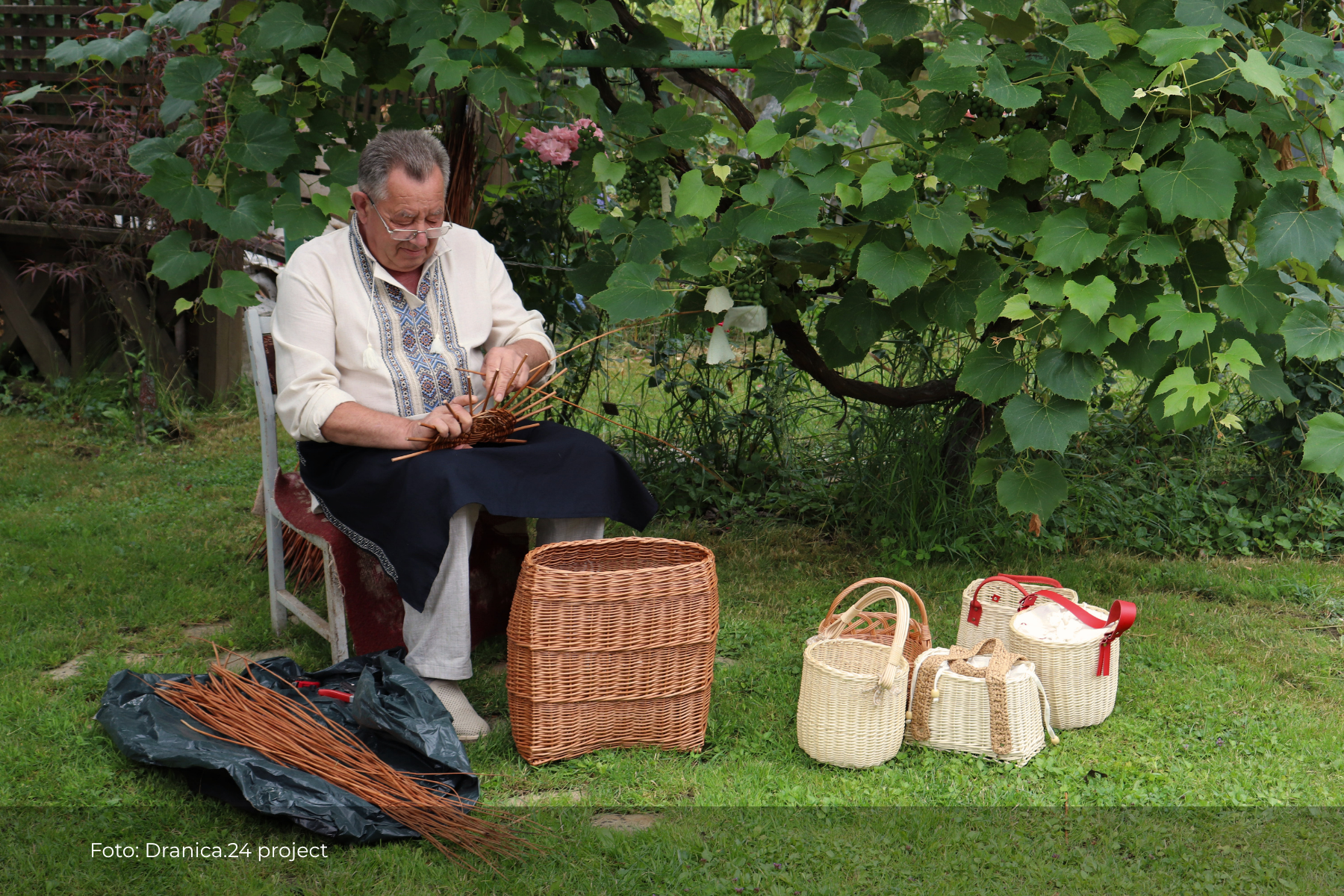
Піддалися майстри й на прохання гостей – показати, як плететься славнозвісний ажур. Для цієї техніки потрібні додаткові інструменти, які кожен майстер виготовляє під себе й зазвичай має в кількох різних розмірах. «Так і називаємо його – колодка для ажуру», – говорить пан Володимир. Роль колодки полягає в тому, щоб фіксувати однакову висоту ажурного просвіту й утримувати стійки в правильному положенні, – це й гарантує ідеальну геометрію виробу. Безпосередньо техніку пояснювала вже пані Марина. Колодку затискають колінами круглою частиною догори – по всьому її ребру пророблені отвори з однаковими відступами. Товстіший край лози обрізають скісно й уставляють у кожен отвір, а тоді затискають прути шурупом усередині колодки. Основу плетуть уже знайомим способом: огинають кожну стійку робочою лозою й міцно притискають донизу, весь час підтягуючи й пильнуючи, щоб плетіння лягало щільно. Паралельно з роботою пані Марина розповідала про роль лозоплетіння в сучасності. За виробами до подружжя звертається чимало відомих українських дизайнерів. Воно й не дивно, суспільство дедалі більше цінує екологічні вироби та предмети щоденного вжитку, тож ремесло знову набирає обертів.
Причому йдеться не лише про вироби, а й про саму техніку. Лозоплетіння – своєрідна медитація: воно відволікає від зайвих думок і дозволяє розслабитися. Пані Марина має власні курси, і наразі в неї вже сімнадцять учнів. Вона запевняє, що опанувати ремесло можна за шість-дванадцять місяців: комусь воно дається одразу, а комусь потрібно витратити більше часу. У межах воркшопу майстриня запропонувала учасникам спробувати поплести, що з успіхом вдалося.
На завершення учасники воркшопу відвідали місцевий музей та крамнички, де кожен придбав для себе на згадку частину цієї давньої традиції.
Більше інформації про проєкт — на сторінці Dranica у Facebook:
https://www.google.com/url?q=https://www.facebook.com/dranica.project/&source=gmail&ust=1793434538622000&sa=E
WHERE HANDS REMEMBER WILLOW WEAVING: AN INTERNATIONAL WORKSHOP FOR THE PRESERVATION OF TRADITIONAL CRAFTS
The international project DRANICA.24 «Promoting the Immaterial Wooden Heritage of the Carpathian Euroregion. A Technical Handbook for Traditional Woodworking» aims to preserve the traditional crafts that have shaped the cultural identity of the Carpathian border regions for centuries. Although its title refers to dranytsia – a traditional wooden roofing material – the scope of the project extends far beyond this single craft, embracing the wide variety of traditional skills that have long sustained the region. One of these is willow weaving.
Willow weaving is one of the oldest forms of traditional decorative and applied art, having developed through the use of natural plant materials. In Zakarpattia, this craft flourished owing to favourable natural and climatic conditions, abundant willow resources, and centuries of cultural interaction with neighbouring European countries. One of the best-known centres of traditional willow weaving is Khust district, where, during the nineteenth and twentieth centuries, distinctive local production techniques, characteristic structural features of woven artefacts, and an established system for the transmission of artisanal knowledge evolved. The emergence and development of willow weaving in Khust district were closely linked to the area’s natural environment. Vast river floodplains created favourable conditions for the cultivation and natural growth of various willow species, which constituted the primary raw material for woven products. The abundance and easy availability of this resource facilitated the widespread adoption of willow weaving as a traditional rural craft.
For this reason, the organisers chose to explore this traditional craft during an international workshop held in the well-known Zakarpattian village of Iza. The village is renowned for its willow-weaving tradition, a craft mastered by almost every local resident. For generations, willow weaving served as the principal source of income for many families. Although local people have gradually diversified into other occupations, the craft has remained an integral part of community life. The craftsman and craftswoman conducting the workshop remarked: “Whatever a person’s profession ‒ whether a doctor, a teacher, or anything else ‒ they come home from work and sit down to weave.”
Participants in the international workshop, including scholars, university lecturers, students, journalists, museum professionals, and other enthusiasts of traditional crafts, visited Maryna and Volodymyr Lenio, who have devoted nearly four decades to professional willow weaving. During an open workshop held at their dwelling, they demonstrated every stage of the craft, from the preparation of raw materials to the finished product, while explaining the technological processes involved and highlighting the cultural significance of willow weaving in the present day.
The production of a willow-woven item consists of two main stages. The first is the harvesting and preparation of the raw material. Willow rods are cut between autumn and early spring, before the leaves begin to emerge. The straightest shoots are carefully selected and sorted by thickness and length. The processing of willow is a traditional craft that requires strict adherence to established techniques. Freshly cut bundles of willow rods are first boiled in large cauldrons for approximately 2.5 to 3 hours. They are then covered with a protective sheet to create a steaming effect. After boiling, the rods are removed and left to rest for one to two hours. This conditioning process allows the bark to separate more easily from the wood, making the rods easier to strip using specialised machines.
It is also worth noting that the colour of willow used for weaving may vary depending on the method of processing and preparing the rods. After boiling and removing the bark, natural willow rods acquire shades ranging from creamy white to deep brown. To obtain a lighter colour, the rods are often bleached with hydrogen peroxide. Other shades can be achieved by dyeing the willow. Depending on the desired design, willow rods of different colours may be combined within a single woven product.
Willow rods are sorted by size and thickness to suit different types of craftsmanship. Thick, sturdy rods are primarily used for furniture-making, including rocking chairs and bent-frame components, whereas thinner rods are intended for lighter household items such as baskets and woven bags. Traditionally, local craftsmen produced a wide range of wicker goods, including household baskets of various capacities, potato baskets, baskets for mushrooms, fruit and grapes, children’s cradles, furniture, decorative platters, poultry cages, and fish traps.
A particularly important place was occupied by large grape-harvesting baskets, which were widely used in the vineyards and wineries of Zakarpattia. Their construction was distinguished by a reinforced frame, tightly woven walls, and sturdy, ergonomically designed handles, ensuring exceptional durability even under intensive use.
The couple who conducted the workshop also maintain their own willow plantation, though they generally prefer to purchase the raw material. “We know how much material we’ll need and what it’ll be used for”, they explain, so there’s no point in spending time on preparation in advance. Moreover, the willow they grow themselves is somewhat thicker than the material they usually work with. As a result, they often sell it to a neighbouring craftsperson who specialises in larger items, such as furniture. Nevertheless, Mrs Maryna assures that, if necessary, should they be unable to order raw material, their own willow would be perfectly suitable for making baskets as well.
Once the material has been prepared, the weaving itself can begin. Before use, the willow rods are soaked to make them soft and pliable. As wicker weaving is Maryna and Volodymyr’s livelihood, they usually prepare several bases for future items at the same time, allowing them to work more efficiently. The weaving process begins with the base. “Without a good foundation, there can be no good house,” Volodymyr Lenio remarked. In their family, it is usually he who makes the base elements for wicker products. This is how the process works. The traditional technique for weaving a round basket base begins with forming a cross-shaped framework. First, four to six thick rods are split down the middle, and the same number of whole rods are inserted into the resulting opening. Next, they are woven in pairs in a circle – using the ‘twine’ technique with two rods – to secure the framework firmly. After that, the spokes are spread out evenly like the rays of a fan, and the weaving continues with a single willow rod, which is worked around each spoke individually until the desired diameter of the base is reached.
Once the base has reached the desired diameter, the artisans carefully trim the ends of the working rods and bend them upwards, creating the transition to the basket walls. Throughout the weaving process, the willow is lightly sprayed with water from time to time to keep it supple and easy to work with. Long, flexible rods are then used for the sides of the basket, each one being inserted in turn between the side-stakes of the base. Every new rod is always introduced with its thicker end facing into the weave, so that the angled cut points towards the inside of the basket. The weaving then continues in the traditional manner, with each rod passing around the side-stakes in a sequence of three movements: once inwards, then outwards, and inwards again. Maryna performed these movements effortlessly ‒ “her hands remember,” as the saying goes. Even while engaged in conversation, her skilled fingers never paused for a moment, deftly and confidently weaving the willow into place.
At the visitors’ request, the artisans also demonstrated how the renowned openwork (fitch) weave is created. This technique requires additional tools, which each craftsperson custom-makes to suit their own working style and usually keeps in several different sizes. “We simply call it an openwork block,” Volodymyr explains. The block maintains uniform gaps between the rods in the openwork and holds the side-stakes in the correct position, thereby ensuring the precise geometry of the finished piece. Mrs Maryna then explained the technique itself. The block for openwork is held firmly between the knees with its rounded side facing upwards. Along its edge are evenly spaced holes into which the prepared willow rods are inserted. The thicker end of each rod is cut at an angle before being placed into a hole, after which the rods are secured with a screw inside the block. The foundation of the openwork pattern is then woven using the familiar technique: each upright rod is wrapped with a working rod, which is pulled down tightly and pressed firmly into place, while the weaver continually adjusts the tension to keep the weave compact and even.
While continuing her work, Mrs Maryna spoke about the place of wicker weaving in contemporary society. Many well-known Ukrainian designers commission wicker products from the couple. This is hardly surprising, as growing public appreciation for environmentally friendly products and everyday household items has contributed to a renewed interest in the craft. Interestingly, Mrs Maryna emphasised that she has not been striving to mass-produce her items, despite having received such offers. For their family, what matters most is that every piece is woven with exceptional craftsmanship and genuine inspiration.
Wicker weaving is a form of meditation: it helps clear the mind, eases distractions, and promotes relaxation. Mrs Maryna runs her own training courses and currently has seventeen students. According to her, the craft can be mastered within six to twelve months ‒ some learners acquire the necessary skills quickly, while others require more time and practice. During the workshop, she invited the participants to try their hand at weaving, an activity they embraced with considerable success. She also noted that they occasionally accept challenging commissions involving techniques or designs they have never attempted before. Yet it is precisely this willingness to experiment that leads to the refinement of their skills and the continuous development of new weaving techniques.
The workshop concluded with a visit to the local museum and artisan shops, where each participant took home a handcrafted piece of this enduring tradition as a lasting memento of the experience.
More information about the project is available on the Dranica Facebook page:
https://www.google.com/url?q=https://www.facebook.com/dranica.project/&source=gmail&ust=1793434538622000&sa=E